
The Great Houses of AI: Who Controls the Stack?
There is no single winning AI stack. Each company is choosing where ownership changes cost, control, or distribution.
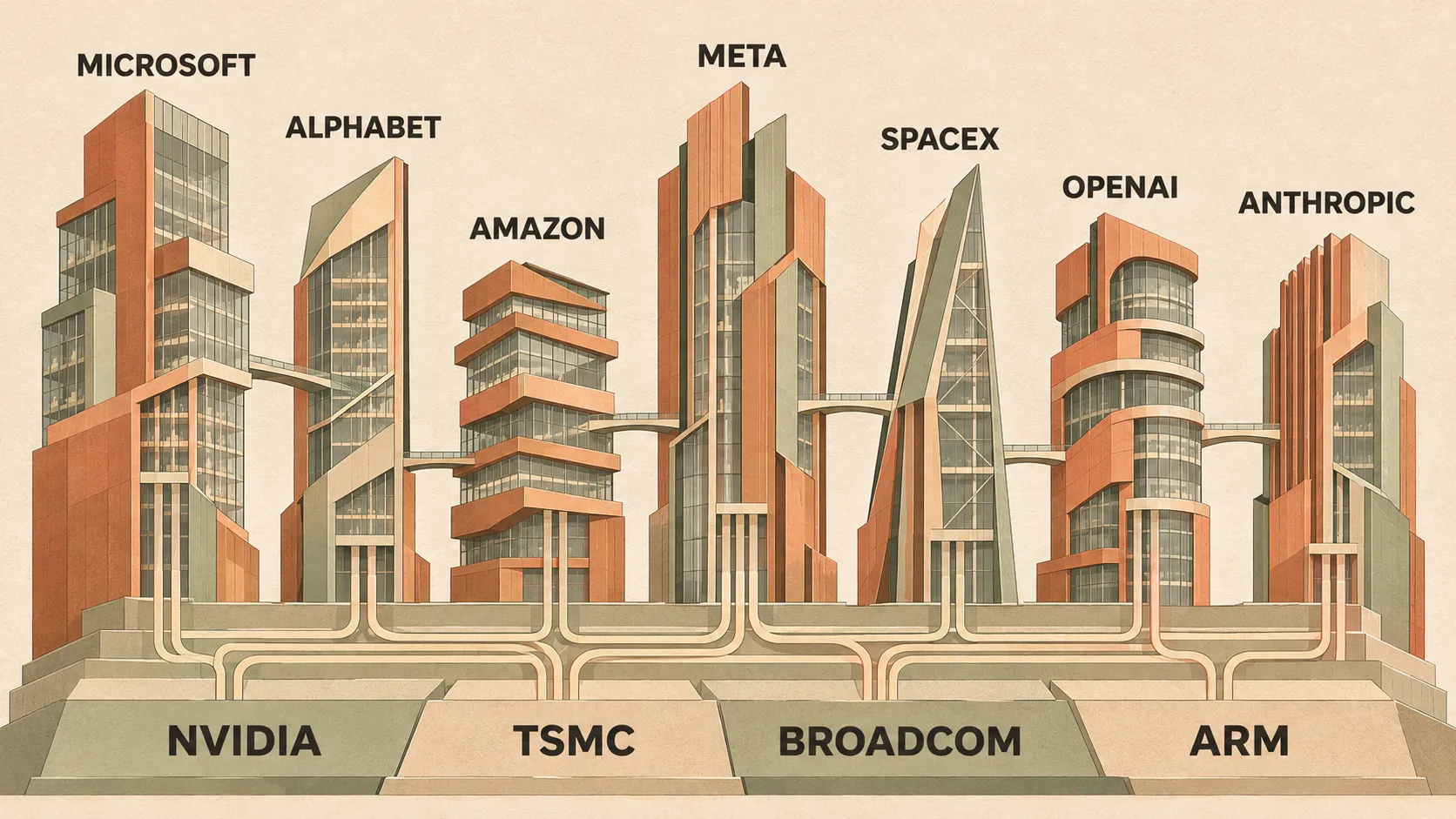
No company owns all of it. Each controls a different mix of chips, data centers, clouds, models, applications, distribution, and services. They compete, but they also depend on one another. A cloud provider distributes a rival’s model. A model company buys compute from another company. A hyperscaler designs its own chips and still buys from NVIDIA.
That’s why the usual distinction between a “full stack” company and a “point solution” is not very helpful.
I don’t think the strongest position is owning every layer. It is owning the few layers that lower costs, speed up product development, secure distribution, or reduce dependence on a scarce supplier. The rest can be bought, leased, or sourced through partners.
The more useful question is:
Which layers create durable control?
The seven layers of the AI stack
It helps to start with a simple map. From the customer down, the AI stack has seven layers:
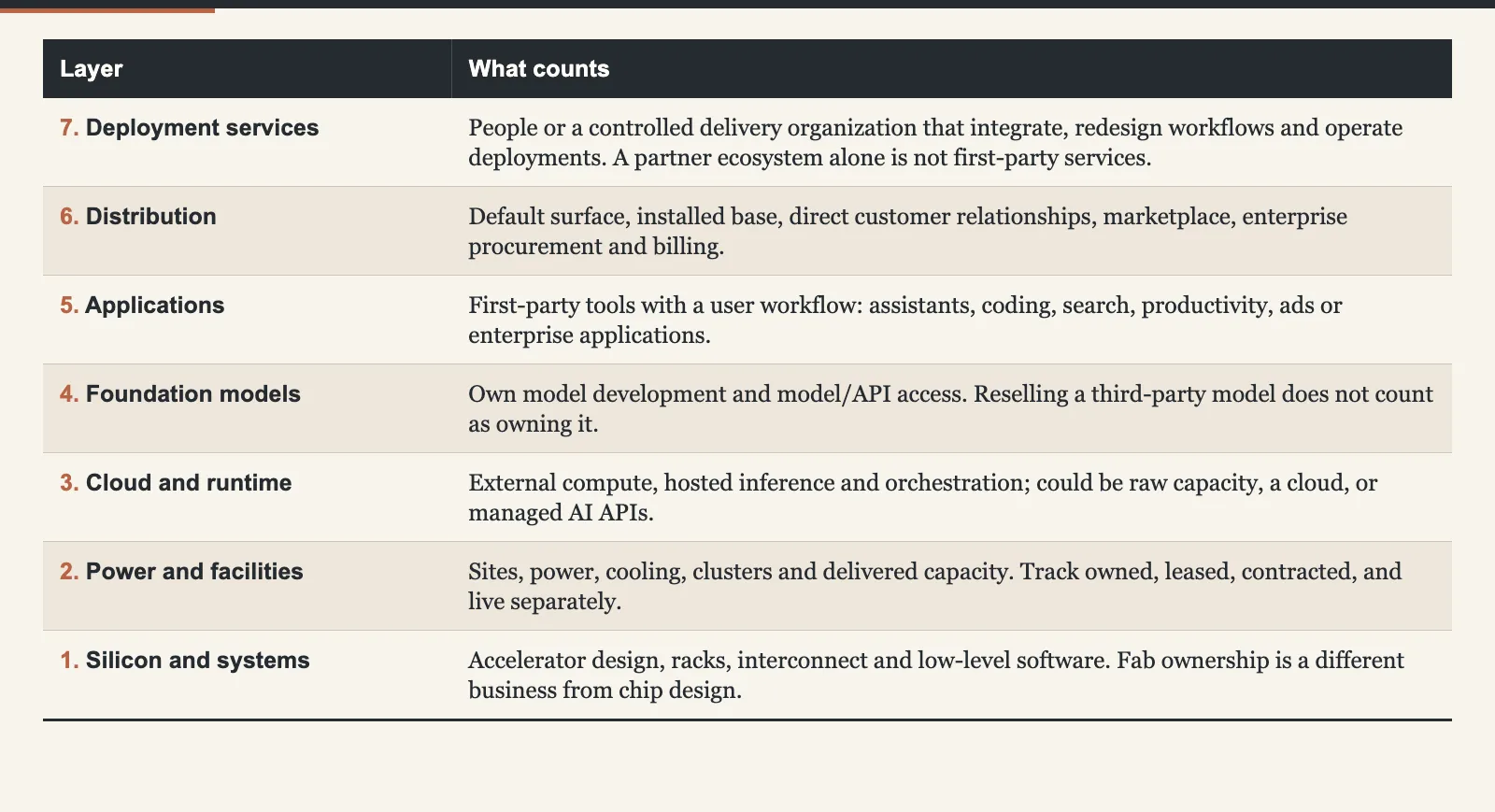
Table 1. The seven layers of the AI stack.
The three largest hyperscalers show different versions of integration. Microsoft combines Azure with Microsoft 365, GitHub, Copilot, emerging Maia silicon, and services, but still relies heavily on licensed frontier models. Alphabet has the deepest demonstrated internal co-design path, from TPUs and data centers through Google Cloud, Gemini, Search, YouTube, and Android. Amazon combines custom silicon, AWS, Bedrock, Nova, Alexa+, retail, ads, and services; Bedrock also benefits from distributing models it does not own. In all three cases, integration and open distribution coexist.
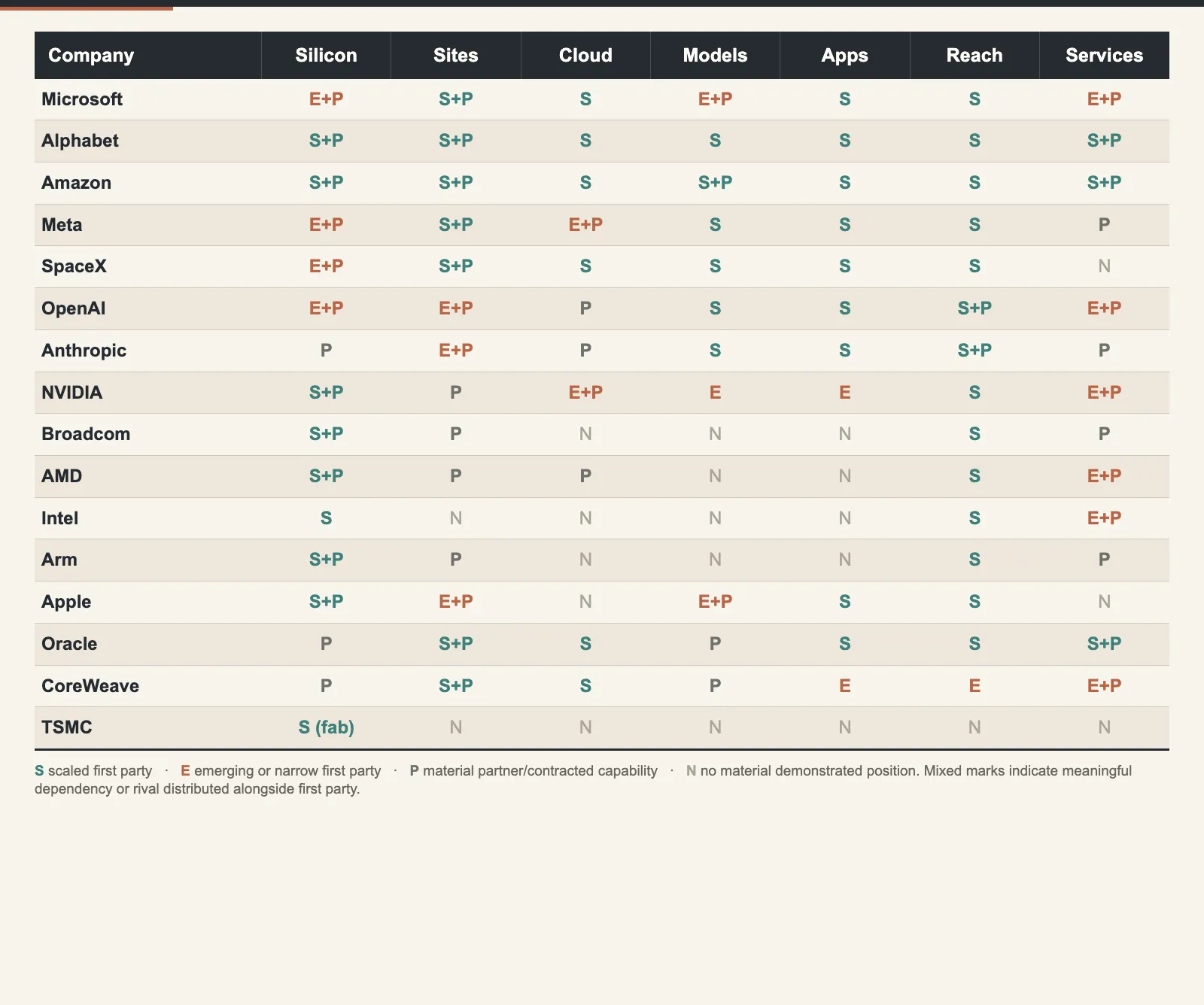
Table 2. Control across the seven layers of the AI stack.
Why integrate at all?
I see three good reasons to integrate.
The first is economics. A large, predictable internal workload can justify investment in custom silicon, data centers, and low-level software. Co-design can improve useful work per watt, reduce latency, and lower the cost of a successful task. At enough scale, even a modest efficiency advantage compounds.
But cheaper tokens are not proof of better economics. The comparison has to hold workload, model quality, latency, and utilization constant. A custom accelerator that is cheap when fully utilized but sits idle for long periods may not be an advantage at all.
The second reason is distribution. A company with an existing customer relationship can insert AI into a workflow without building a new sales channel. Microsoft can place Copilot inside Microsoft 365. Google can place Gemini across Search, Android, and Workspace. Meta can use AI to improve engagement and monetization across an advertising business that already reaches billions of people.
Apple is the clearest reminder that distribution does not require a public cloud. Its leverage comes from the device, operating system, App Store, and default position. It can rely on outside model technology and still control the customer experience.
The third reason is control. Owning a layer matters when outside supply is scarce, switching is expensive, or the layer generates information that improves the rest of the system. A company may integrate to secure capacity, protect a product roadmap, or keep a critical dependency from becoming a tax.
The distinction I would make is: integration should remove a bottleneck. Owning an adjacent layer is not enough.
Model labs can scale without owning the cloud
OpenAI and Anthropic take a different path.
Both own frontier models, first-party applications, API distribution, and increasingly sophisticated enterprise platforms. Neither owns a hyperscale public cloud. They assemble capacity through contracts across multiple suppliers.
OpenAI describes a training and inference portfolio that includes NVIDIA infrastructure, several cloud providers, alternative accelerators, and Jalapeño, an OpenAI-designed accelerator implemented with Broadcom whose engineering samples are running but whose scaled deployment is still ahead. Microsoft remains its primary cloud partner under the companies’ current agreement, but the license is nonexclusive and OpenAI can serve customers through other clouds. OpenAI models are now also distributed through Google Cloud and AWS.
Anthropic is following a similar multi-supplier strategy. It owns Claude and its applications, while its prospectus discloses substantial compute and infrastructure commitments across hyperscalers and the possibility of operating its own data centers. Amazon and Google are major economic shareholders and infrastructure partners, but neither has exclusivity. Claude is available through AWS, Google Cloud, Azure, and Anthropic’s own channels.
Contracting for capacity can be faster and more flexible than building a cloud, but it does not make these companies asset-light. It moves capacity, counterparty, minimum-commitment, cancellation, and utilization risk into long-term agreements. Owning the model changes how infrastructure economics are experienced; it does not eliminate them.
SpaceX spans more layers, but still depends on partners
SpaceX is a useful test of the thesis because it combines scaled connectivity, live compute infrastructure, models, applications, and distribution.
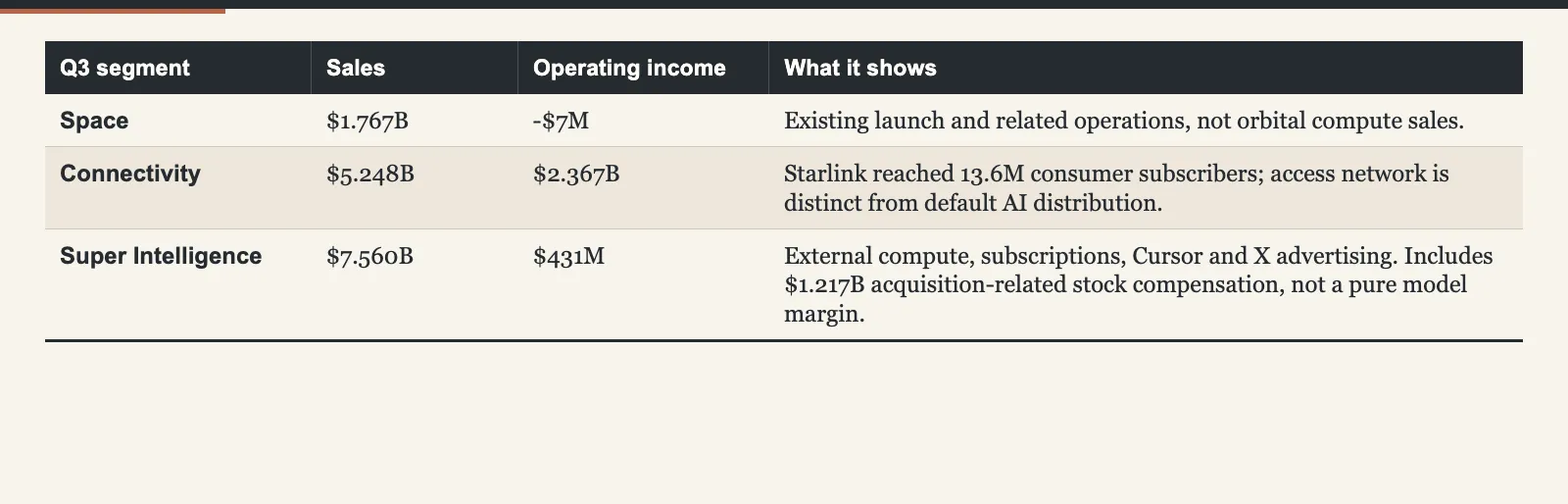
Table 3. SpaceX Q3 2026 segment results.
Its compute business is already operating at scale. SpaceX reported 1.7 GW of nameplate compute at September 30 and $7.56 billion of third-quarter Super Intelligence revenue, including cloud services, Cursor, and software. That supports a scaled cloud and runtime designation, although it is not a general-purpose public cloud.
At silicon, Terafab changes the classification but does not yet amount to scaled first-party manufacturing. SpaceX, Tesla, and SpaceXAI have announced a Texas complex intended to combine design, logic, memory, packaging, and testing. SpaceX says the first phase represents $16.8 billion of planned capital investment; a September court filing says the project has no commercial operations or products yet. The table therefore marks SpaceX as emerging plus partner-dependent in silicon, not scaled.
SpaceX has also announced more than $74 billion of planned supercompute facilities at Starbase and in Cochise County, Arizona. Those projects strengthen its facilities position, but planned investment is not delivered capacity.
Its live infrastructure business also serves companies that compete with its models and applications.
Anthropic has disclosed an arrangement for NVIDIA-backed terrestrial capacity from SpaceX. SpaceX has separately disclosed a large Google compute agreement. Cursor has used outside model and inference infrastructure even after becoming part of a much more integrated company.
Orbital compute should also be separated from the operating business. Starlink and launch are real, scaled businesses. Starmind and the public orbital-compute roadmap demonstrate intent, not yet a scaled commercial market for training or inference in space.
Specialists can still hold control points
NVIDIA is a clear counterexample to the full-stack thesis.
NVIDIA does not control the leading consumer assistant, productivity suite, social network, or public cloud. It has still become one of the most valuable companies in the world.
That is because NVIDIA did not remain a narrow chip vendor. It integrated around its bottleneck. CUDA, NVLink, networking, systems, racks, and its developer ecosystem reinforce the accelerator. The company owns more of the path required to turn silicon into useful AI work, without needing to own the end user.
TSMC is a cleaner example. It does not own a merchant accelerator, cloud, foundation model, or application distribution. It controls a difficult manufacturing bottleneck and supplies competing designers. Its value comes from that neutral foundry position, not from expanding into the rest of the stack.
AMD, Intel, CoreWeave, Broadcom, and Arm occupy different specialist positions across accelerators, CPUs, merchant GPU cloud, custom silicon, networking, and licensing.
The vulnerable specialist sells an interchangeable component, sits far from the customer, and depends on a few buyers that can build or bundle a substitute.
The defensible specialist controls something difficult to replicate, sells to several competing stacks, and remains neutral enough that each one still wants to buy from it.
NVIDIA is a multi-layer specialist. TSMC is a manufacturing control point. Neither needs to own the user to capture durable value.
Enterprise delivery is becoming another point of competition
As models become easier to access, more of the competition is moving into implementation and ongoing enterprise deployment.
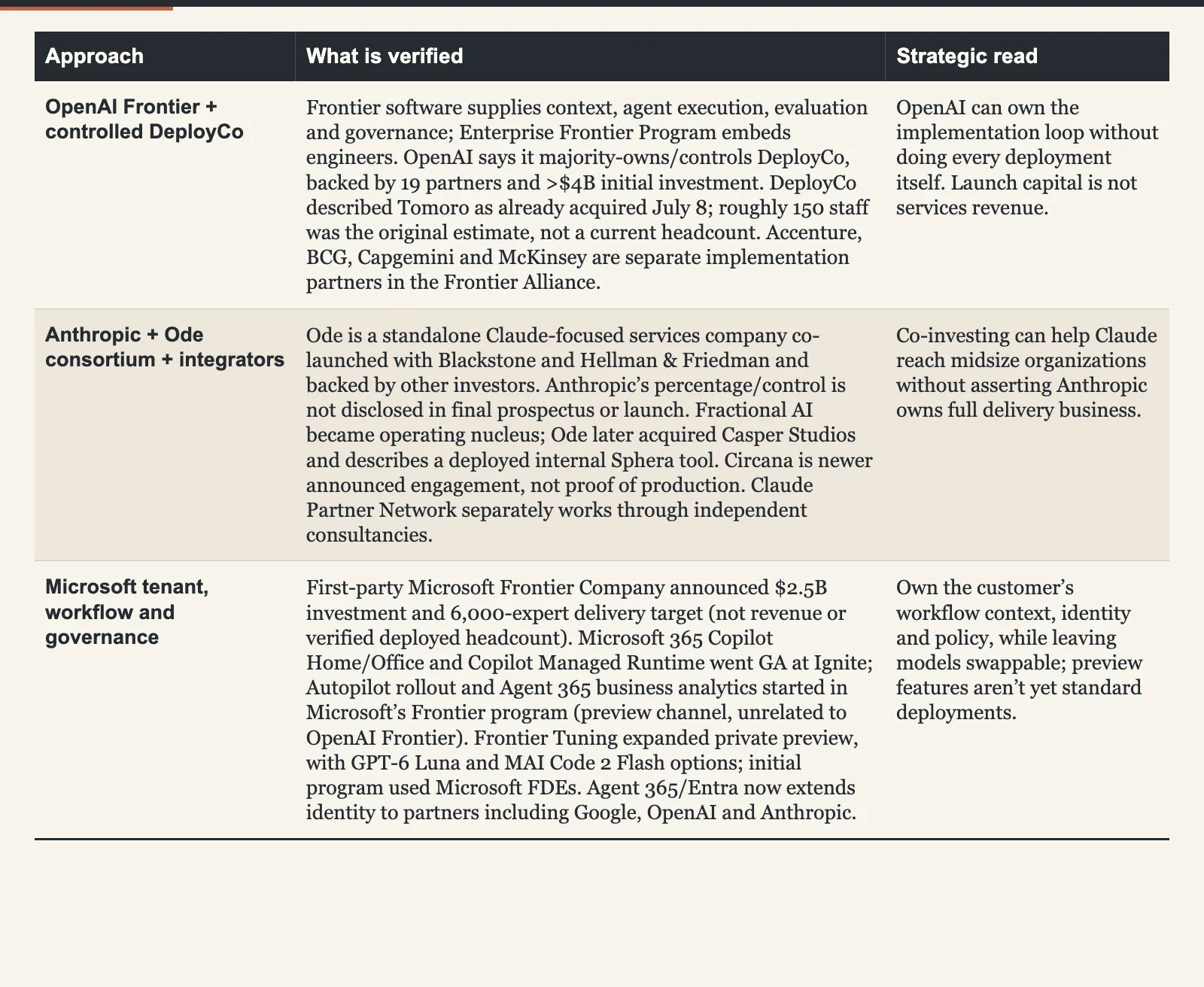
Table 4. Three approaches to enterprise AI delivery.
The three approaches differ in where they place the customer relationship. OpenAI is building a first-party deployment layer, Anthropic is using Ode and independent consultancies, and Microsoft starts with the tenant: identity, workflow data, governance, and an installed enterprise channel. The strategic question is whether deployment services become a durable profit pool or mainly accelerate consumption of the underlying model and platform.
What would disprove the thesis?
This thesis should be testable.
It weakens if independent stacks match integrated stacks on quality-adjusted cost and power efficiency; if workloads become portable enough that defaults no longer matter; or if custom accelerators displace merchant GPUs without creating new switching costs. It also weakens if model and infrastructure specialists sustain strong returns despite concentrated buyers and abundant subsidized capital.
The evidence should come from realized economics, not announcements. Capex is not proof of technical advantage. Contract value is not revenue. Installed capacity is not utilization. A private funding mark is not a public market capitalization. A marketplace listing does not tell us who runs inference or holds the service-level agreement.
Three questions I would ask
For founders and investors, I would focus on three questions:
-
What bottleneck does the company control?
-
Does integration make the product meaningfully cheaper, faster, better, or easier to distribute?
-
If a large customer builds or bundles an adjacent layer, does the company become more valuable, less valuable, or unnecessary?
Those questions are more useful than counting layers on a stack diagram.
This post is also on Substack, where you can comment.