
Seven Reasons The Browsers Wars Just Reignited!
And Three Why That Might Not Make Sense
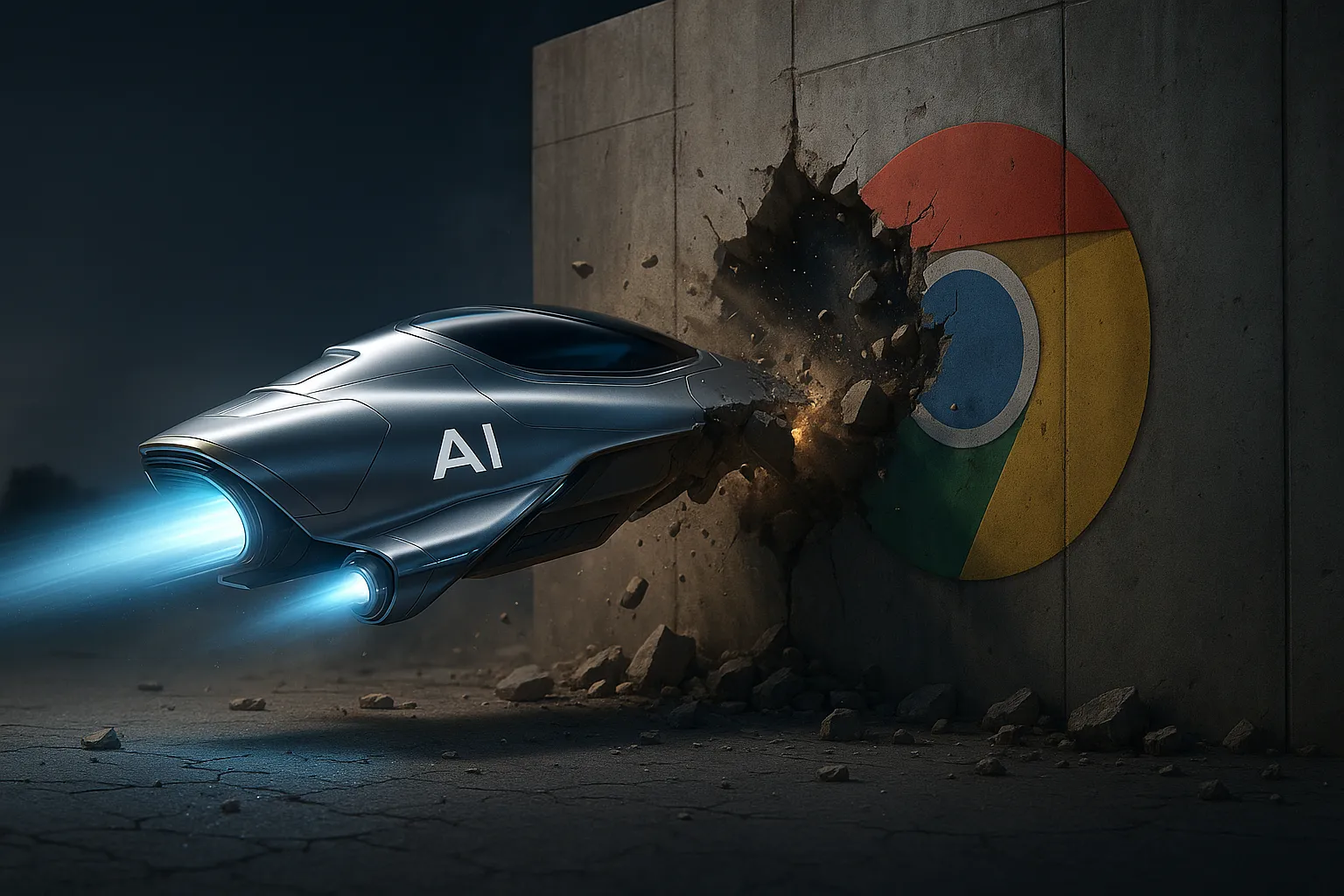
By now, you’ve likely heard about how AI companies are racing to build their own browsers.
-
OpenAI is reportedly launching a browser within weeks/months with ChatGPT and their “Operator” AI agent built-in. According to reports, they want “direct access to user data” without Google as an intermediary, protecting their 800 million user base from Chrome’s dominance.
-
Perplexity launched their Comet browser for premium subscribers. CEO Aravind Srinivas explicitly stated: “That’s kind of one of the other reasons we wanted to build a browser, is we want to get data even outside the app to better understand you.” He sees browser defaults as creating “infinite retention.”
-
The Browser Company pivoted from Arc to launch Dia, an AI-first browser. Their CEO believes “AI won’t exist as an app. Or a button. We believe it’ll be an entirely new environment — built on top of a web browser.”
Browsers are hard… the market is mature and it’s hard even for giants like Apple and Microsoft to break into Chrome’s dominance. So why now?
Seven Reasons Why It Makes Sense
There are some good reasons to try - the size of the prize is bigger than ever! Here are the top seven reasons:
-
Data: AI Labs are racing to build better agentic models which can browse the internet the way we do. The number one bottleneck right now is training data. If you are the browser, you have extremely granular data on how users use the web, for personal or professional (SaaS) use. This data is gold and can then be used to take computer use by AI agents to the next level.
-
AI-first user experience differentiation: Unlike traditional browsers that bolt on AI features, purpose-built AI browsers can reimagine the entire interface. Context-aware AI assistants can work across tabs, automate complex workflows, and provide insights without the limitations of extensions or web apps.
-
Platform lock-in and ecosystem effects: Once users adopt AI-enhanced workflows within a browser, switching becomes costly. Browsers can become gateways to entire AI service ecosystems.
-
Revenue diversification opportunities: Custom browsers enable new revenue streams: enterprise subscriptions for automation, premium AI features, B2B platform services, controlled advertising models…
-
Distribution independence: Owning the browser eliminates dependency on app stores and third-party distribution channels. AI companies can push updates directly to users, control default services, and avoid platform fees.
-
Future-proofing for the AI agent era: As AI agents become more capable, they need robust platforms to interact with the web on users’ behalf. Browsers provide the ideal environment for agents to navigate websites, fill forms, and complete tasks autonomously - capabilities impossible through APIs alone. If you own the browser, you don’t need headless browsers and other tricks to automate a vast majority of the web.
-
Data sovereignty and regulatory compliance: With 75% of countries now having data localization laws, controlling the browser enables AI companies to process data locally and comply with varying regional regulations. This provides competitive advantages in enterprise markets where compliance is critical.
Just as Google built Chrome to protect its search business, AI Labs recognize that in an AI-first world, the browser becomes the most strategic infrastructure. Browsers are becoming operating systems where all software will be accessible - and AI companies need to own that layer to capture the full value of their innovations. And perhaps the market is not as closed as it used to be. In cybersecurity, Island (valued at ~$5B) and Talon (acquired for ~$625M) built custom browsers for enterprise because they needed “last-mile control” - the ability to secure data at the exact point where users interact with it. While early, they’ve certainly seen some success in penetrating the enterprise market. Now the question is - Can AI-native browsers do the same for consumers?
Three Reasons Why It Might Not Make Sense
While I acknowledge there are some solid reasons to go down this route - here are three reasons why this might not make sense:
-
The Desktop Beachhead Is Already Secured: AI labs like OpenAI, Anthropic, and Google already own critical user touchpoints—ChatGPT desktop, Claude web app, Gemini in Chrome. A new browser would cannibalize their own traffic and add needless overhead. Why rebuild the street when you already own the corner store?
-
Browsers Are Legacy UX for an AI-native World: The browser model—tabs, URLs, click-to-search—is an artifact of the link-based internet where humans are the primary users. AI-native interfaces (agents, chat-first, voice, ambient tools) are orthogonal to that paradigm. The real opportunity is in new interaction models, not retrofitting AI into a 2000s shell.
-
Browser Loyalty Is Harder Than even OS Lock-In: Outside the Silicon Valley bubble, Chrome and Safari are deeply entrenched. Switching browsers is rare behavior for mainstream users. You can reach 95% of users via extensions, embedded agents, or headless browser automation. Building a new browser is fighting gravity for marginal gain.
No matter what, we all win!
The best part? Irrespective of whether the AI-native browsers become dominant or remain niche, consumers win! We all benefit from increasing competition which hopefully jolts Chrome and Safari into innovating faster. And that right there might be the ultimate benefit for the billions who use these browsers!
This post is also on Substack, where you can comment.