
From Tropos to Warp: Why This One Is Personal
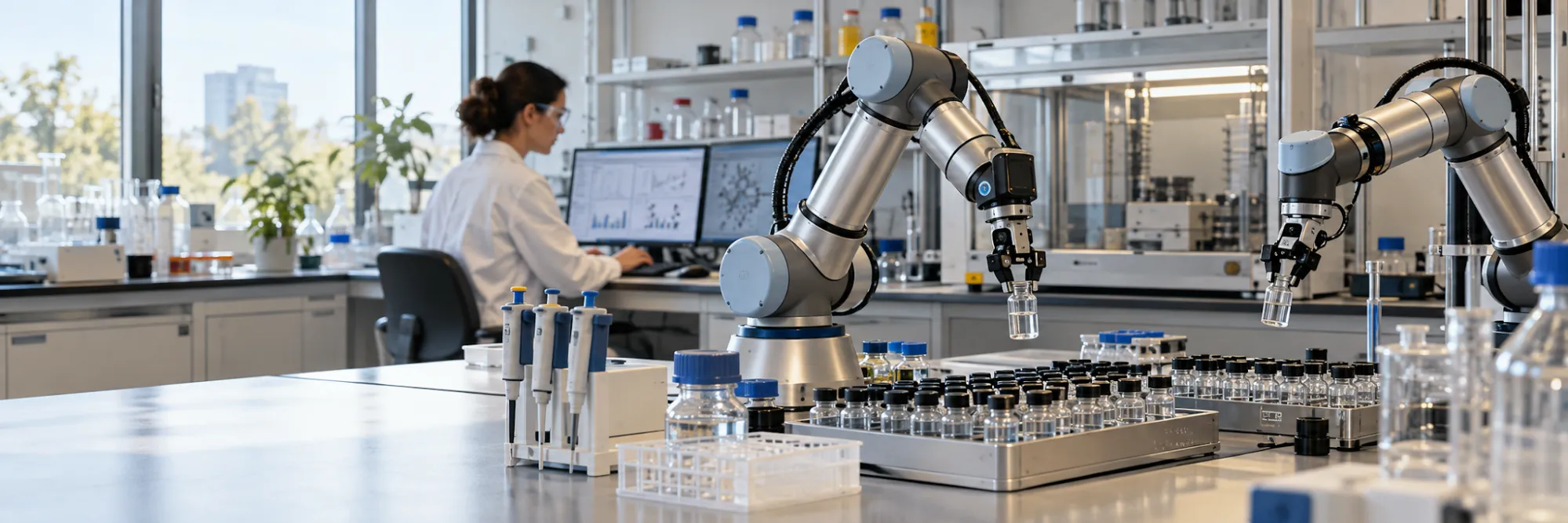
AI-generated illustration of a chemistry lab.
Kevin Weil and I first worked together about two decades ago at Tropos Networks. We were trying to build wireless mesh networks for municipalities. Connecting entire cities wirelessly was an ambitious goal.
We stayed in touch over the years, and I’ve enjoyed following Kevin’s career. I didn’t expect that, two decades later, we’d be working together again.
Kevin is now building Warp, and I’m glad to play a small part in it.
After Tropos, Kevin moved from networking into consumer products, space, and AI. He went to Cooliris, then Twitter, where he eventually led product. He led product at Instagram, helped build Meta’s Libra and Novi effort, and became President of Product and Business at Planet, working with a company observing Earth from space. Then came OpenAI: first as Chief Product Officer, and later leading OpenAI for Science.
At Warp, he gets to draw on both his training in physics and his experience turning new technology into products people use.
Our own paths went in different directions, but we stayed in touch from time to time through the Tropos alumni network. As the AI wave took off, we reconnected more closely. We spent time together as Kevin’s work at OpenAI increasingly focused on science, and as he began working through the idea that would become Warp.
As Kevin worked through the idea, I got more and more excited. We had already been exploring AI, robotics, and life sciences at Lightspeed. Warp put that work to use on a problem we wanted to help solve.
Lightspeed led Warp’s Series A. We’ve shared the investment thesis on the Lightspeed blog. I wanted to share the more personal story here, because the people are such a big part of why this matters to me.
The lab has to keep up with the idea
AI can suggest a molecule. Someone still has to make it.
In drug discovery, scientists repeatedly design, make, and test variations of a molecule, using the results to decide what to try next. A predicted molecule still has to be made and tested before scientists know whether it works.
If we get much better at generating ideas but leave the capacity to test them largely unchanged, we simply move the bottleneck. The opportunity is to improve the whole cycle: what we choose to make, how we make it, and what we learn from the result.
Warp is starting with the practical work of making compounds for biotech and pharmaceutical companies. It is a U.S.-based contract research organization focused on chemistry for preclinical small-molecule programs, particularly the synthesis of variations during lead optimization. It is building infrastructure for drug developers.
Warp charges for compounds delivered. That gives customers a straightforward way to judge the service: did they get the compounds they needed? The company is currently working with a small number of design partners.
Experienced chemists lead the work, with automation increasing over time. The ambition is to connect those chemists, AI models, and robotics in laboratories where each experiment helps improve the next one. That includes experiments that fail. A failed reaction can still tell you something valuable about how chemistry works.
What interests me is how much the lab can learn from doing the work. Recording the conditions and results of each run gives the team data to improve its models, choose the next experiment, and fix unreliable steps. The value of a run extends beyond the compound it produces.
Why now, and why in the United States?
AI models can help plan experiments, and robots can take on more of the repetitive lab work. Warp can design its labs around those capabilities from the start, rather than fit them into processes built for manual work.
Making this reliable will take work. A lab has to deliver the compounds customers need, on time and at a price they can afford. Starting with customer programs gives Warp a way to test whether its automation actually improves the service.
The decision to build in the United States matters just as much.
Much of the chemistry that supports drug discovery has moved overseas. Rebuilding domestic capacity means giving American biotech and pharmaceutical companies more options for work that is central to their future. It also means developing the expertise, experimental data, and operating experience that will shape the next generation of scientific AI.
To me, scientific leadership requires the ability to carry ideas all the way through to experiments. We need places where scientists can make things, test them, learn, and do it again. If AI makes discovery faster, the countries that build that capacity will be better positioned to benefit from it.
Warp aims to make domestic chemistry competitive by reducing the cost and time needed to produce compounds. Success would give U.S. drug developers more capacity at home and help them move promising medicines forward faster.
The people make this personal
Kevin, DJ Patil, Sol Reisberg, and Mano Paluri bring an unusual combination of experience to this problem. Kevin has built products and teams across several technology waves. DJ brings data science, healthcare, and public-service experience. Sol brings the perspective of a medicinal chemist who understands what drug discovery teams need. Mano brings deep experience building frontier AI.
More than anything, they are incredible human beings.
This is one of the reasons I do venture: the privilege of working with people I admire as they take on difficult, ambitious problems. Kevin, DJ, Sol, and Mano could have chosen many paths. They chose to build labs that could help scientists discover better medicines.
Two decades ago, Kevin and I were working on connecting cities. Today, I get to work with him again, alongside DJ, Sol, Mano, and the Warp team, on helping scientists discover new medicines faster.
I couldn’t be more delighted to be part of this effort.
Onwards!
This post is also on Substack, where you can comment.