
5 Things That Blew My Mind In 2025
The "Wow" inducing moments that stood out above and beyond in this incredible year!
The year 2025 delivered breakthrough moments that made jaws drop… from self-driving cars that made steering wheels feel optional, to AI coding assistants that genuinely shocked me with their capabilities, to robots so lifelike that CEOs had to cut them open to prove they weren’t humans in costume. Here’s what captured my imagination this year.
1. Self-driving went from “hands ready” to “hands forgotten”
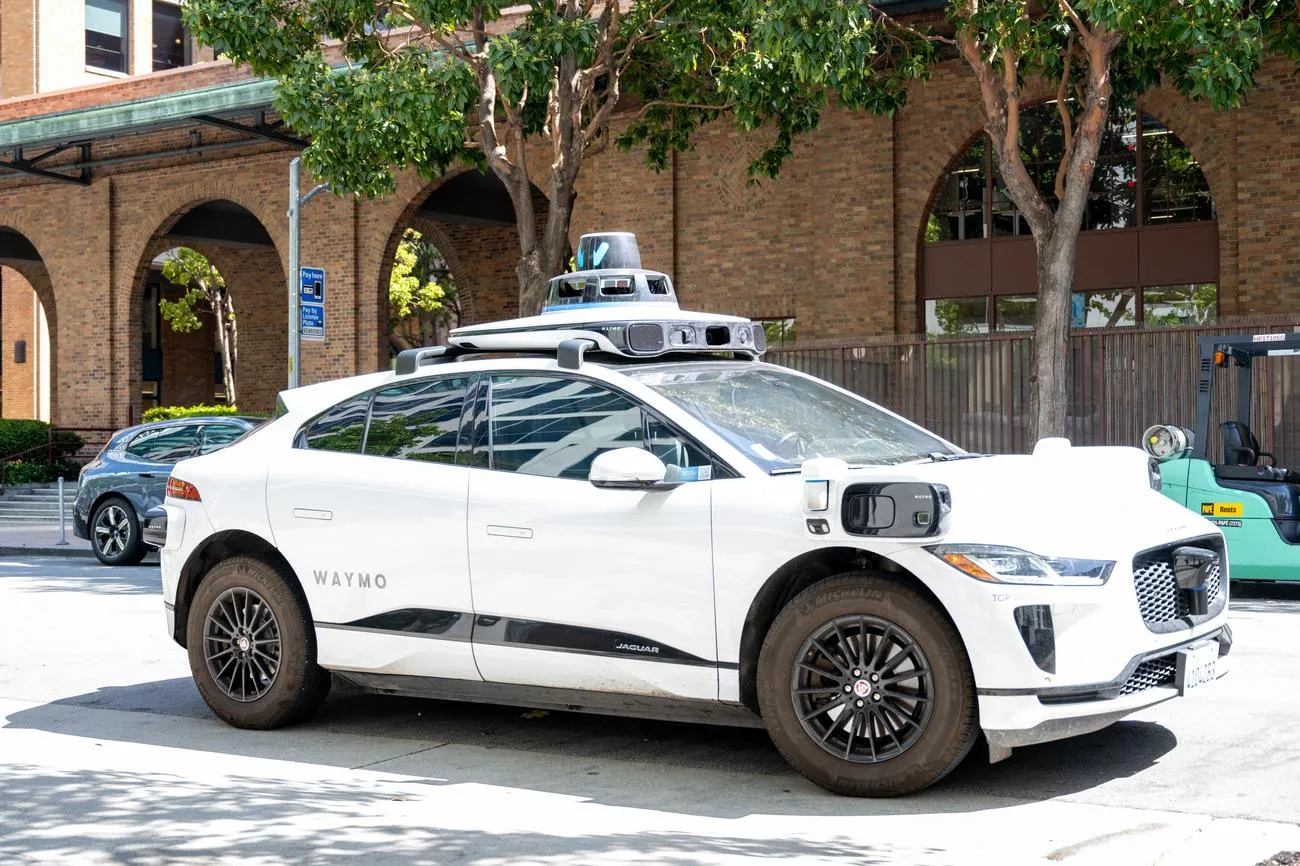
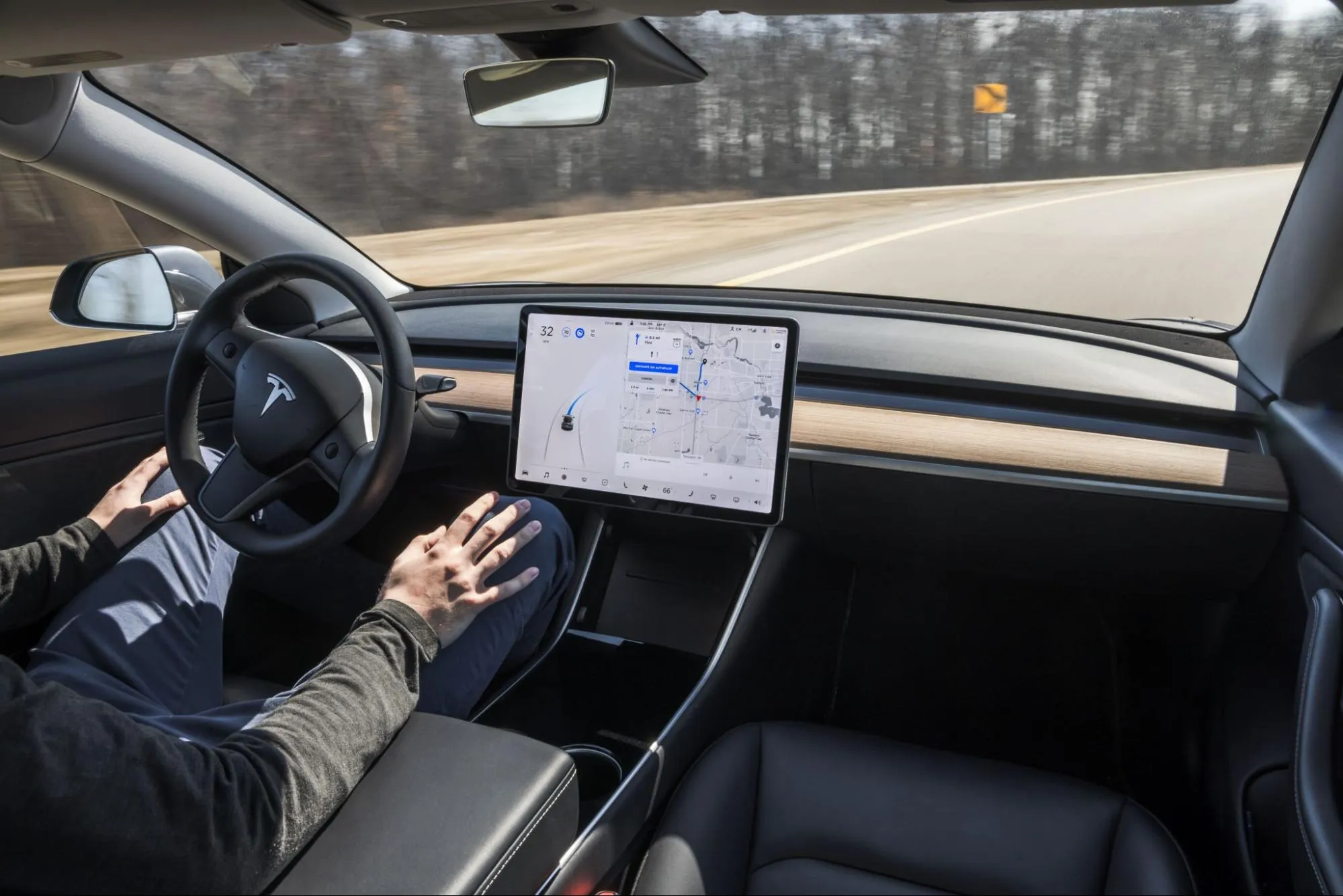
Tesla FSD and Waymo both hit inflection points this year: I’ve been driving Teslas for years, but 2025 was the first time I regularly completed trips—from parked position to parked position—without touching the steering wheel. Not highway cruising. Actual point-to-point driving through intersections, lane changes, parking lots. The gap between “driver assistance” and “the car just drives” finally closed for real-world use cases.
Waymo’s expansion to freeways was equally jaw-dropping. The robotaxis now handle highway merging, lane changes at speed, and exits with a smoothness that feels more confident than most human drivers. Watching a car with no one in the front seat navigate rush hour traffic at 65 mph doesn’t get old.
What made 2025 different wasn’t any single demo—it was the accumulation of uneventful rides. The “wow” moment came from realizing I’d stopped being impressed because it just *worked*.
2. Claude Code is A++ With Widespread Impact Even Beyond Software Engineers
Claude 4 Sonnet in May, then Claude 4.5 Opus in November—both genuinely surprised me: I’ve used AI coding assistants since GitHub Copilot launched. They were useful for boilerplate, autocomplete, explaining code. But Claude in 2025 crossed into territory that felt qualitatively different.
Claude 4 Sonnet could take a vague product spec and produce working code that anticipated edge cases I hadn’t mentioned. It understood intent, not just syntax. The May release had developers posting threads about shipping features in hours that would have taken days.
Then Claude 4.5 Opus dropped in November and the discourse went from “this is helpful” to “this is unsettling.” The model handles complex multi-file refactors, maintains context across enormous codebases, and debugs issues by reasoning through system architecture. It doesn’t just write code—it thinks about code the way senior engineers do.
What blew my mind: I had side projects I’d been meaning to finish for years. Claude helped me either complete them in a weekend or realize they weren’t worth completing—because it could build something better from scratch faster than I could maintain what I’d started.
I couldn’t have captured what’s happening better than Andrej Karpathy -
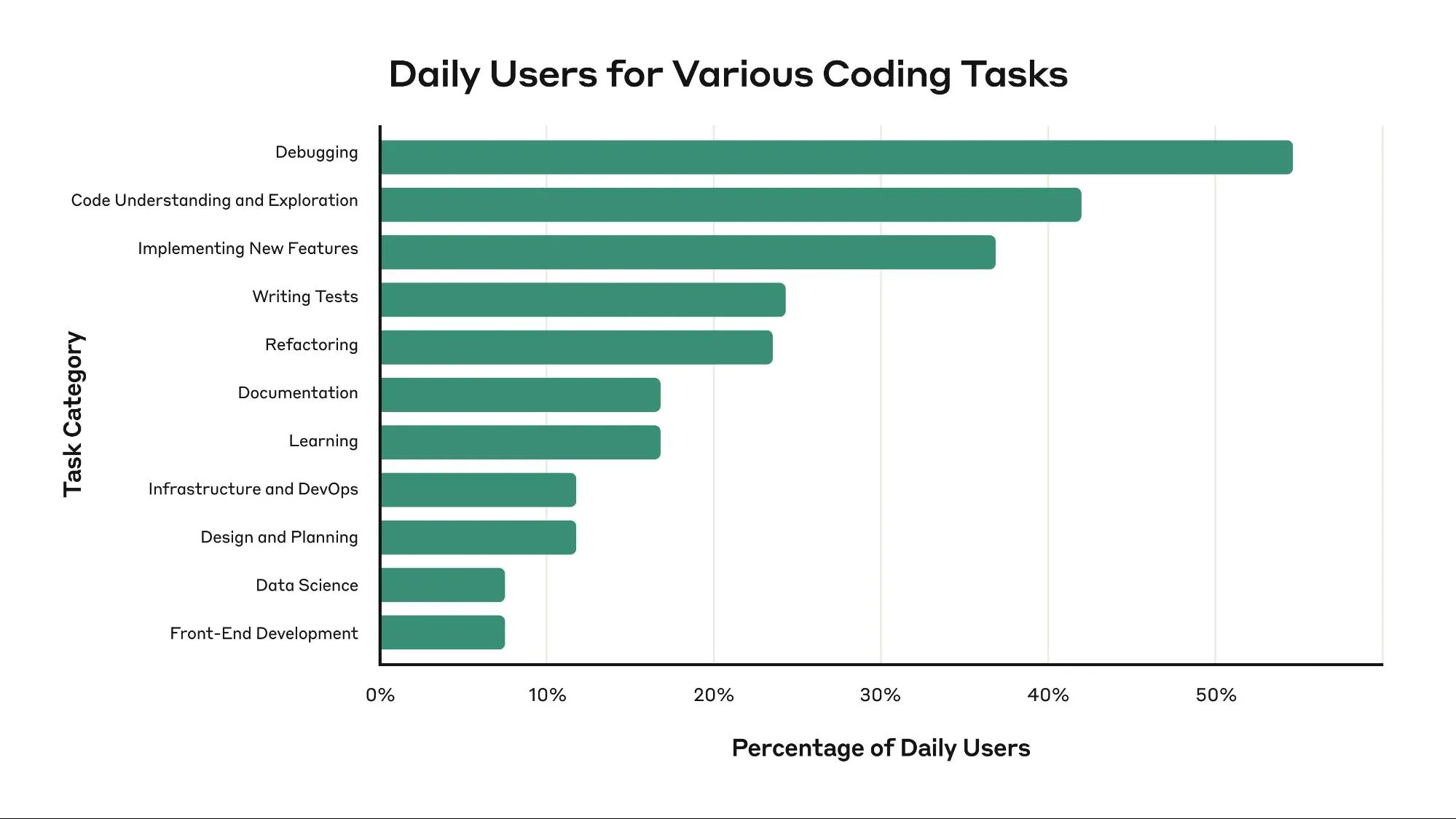
And then beyond software engineering, I’m seeing increased use of Claude Code by finance, operations, growth marketing, product management and many other teams within enterprises. This note by Anthropic proved prescient - https://www.anthropic.com/research/how-ai-is-transforming-work-at-anthropic
3. AI video generation went from “impressive demo” to “casual creativity tool”
Google’s Veo 2 and the viral demos made AI video feel real: Google’s video generation model produced outputs so photorealistic that demos sparked genuine debate about what was AI-generated versus filmed. The results were indistinguishable from real footage.
But the bigger story was democratization. Tools like Runway Gen-3, Pika, and Kling matured to the point where creators without Hollywood budgets could produce content that would have required VFX teams a year ago. The barrier to visual storytelling collapsed.
What struck me most wasn’t the technical quality (though I have to admit the intuited physics awareness in these models is super impressive), it was watching how quickly people integrated these tools into creative workflows. YouTubers generating B-roll. Marketers producing ad variations. Hobbyists making short films on weekends. The “wow” wasn’t a single viral video; it was opening social media and seeing AI-generated content become unremarkable because it was everywhere.
Video generation in 2025 did what image generation did in 2023: moved from “look what AI can do” to “look what I can do with AI.”
4. Humanoid robots crossed the uncanny valley—and sparked conspiracy theories
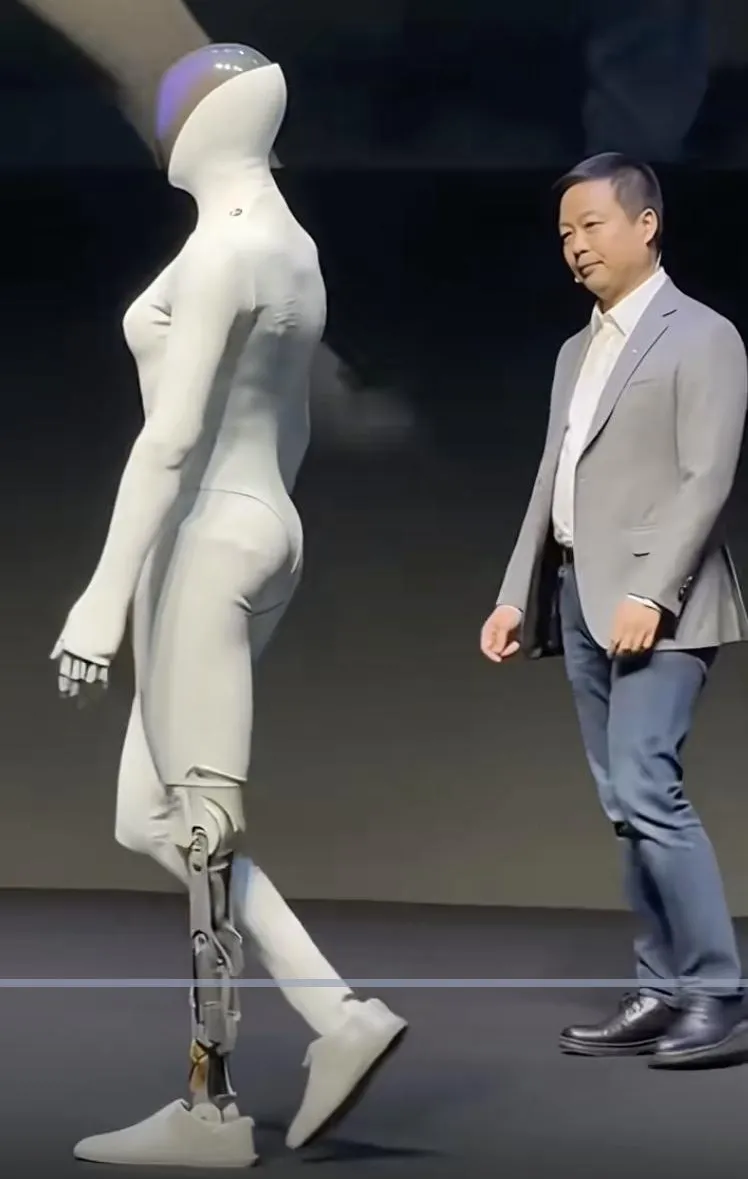
The XPeng Iron “Catwalk” controversy stole the show: At XPeng’s AI Day in November, the Chinese automaker unveiled its humanoid robot—and the internet immediately called it fake. The robot moved so fluidly that viewers claimed to spot “the outline of a human ear” beneath its covering.
CEO He Xiaopeng’s response was legendary: he cut open the robot’s leg on stage, slicing through synthetic skin to expose actuators and circuitry while the robot continued walking. The dramatic proof went viral across social media. Even Elon Musk weighed in: “Not bad… Tesla and China companies will dominate the market.”
The Iron robot’s specs justify the hype: 82 degrees of freedom, 22-DoF human-sized hands, a bionic spine with artificial muscles, and 2,250 TOPS of onboard computing.
Unitree’s backflipping robot dancers wowed concert audiences: Six G1 humanoid robots performed as synchronized backup dancers at a Wang Leehom concert, executing coordinated front flips in perfect unison.
Figure AI made robots useful at home: The October reveal of Figure 03 showed the robot autonomously cleaning messy living rooms, gathering dishes, doing laundry—all without human teleoperation. The demo hit 5.5 million views on YouTube.
These robots still have a long way to go before ready for prime time - but the hardware improvements are advanced more rapidly in 2025 than I expected!
5. AI became a genuine scientific collaborator with validated discoveries
The AI Co-Scientist validated that machines can generate real hypotheses: Google DeepMind’s multi-agent system achieved something unprecedented - generating scientific hypotheses that were later confirmed by experiments. In one study, the AI recommended drug repurposing candidates for liver fibrosis, with one candidate reducing disease markers by 91%.
Even more interesting: researchers at Imperial College London revealed that the AI independently proposed a mechanism for bacterial DNA transfer that matched unpublished experimental results they had spent years developing—the AI reproduced the same insight in days.
Isomorphic Labs approached the holy grail of AI drug discovery: The DeepMind spinoff announced it’s “very close” to initiating the first human clinical trials of AI-designed drug candidates. They raised $600 million in March and hold partnerships worth up to $2.9 billion with Eli Lilly and Novartis.
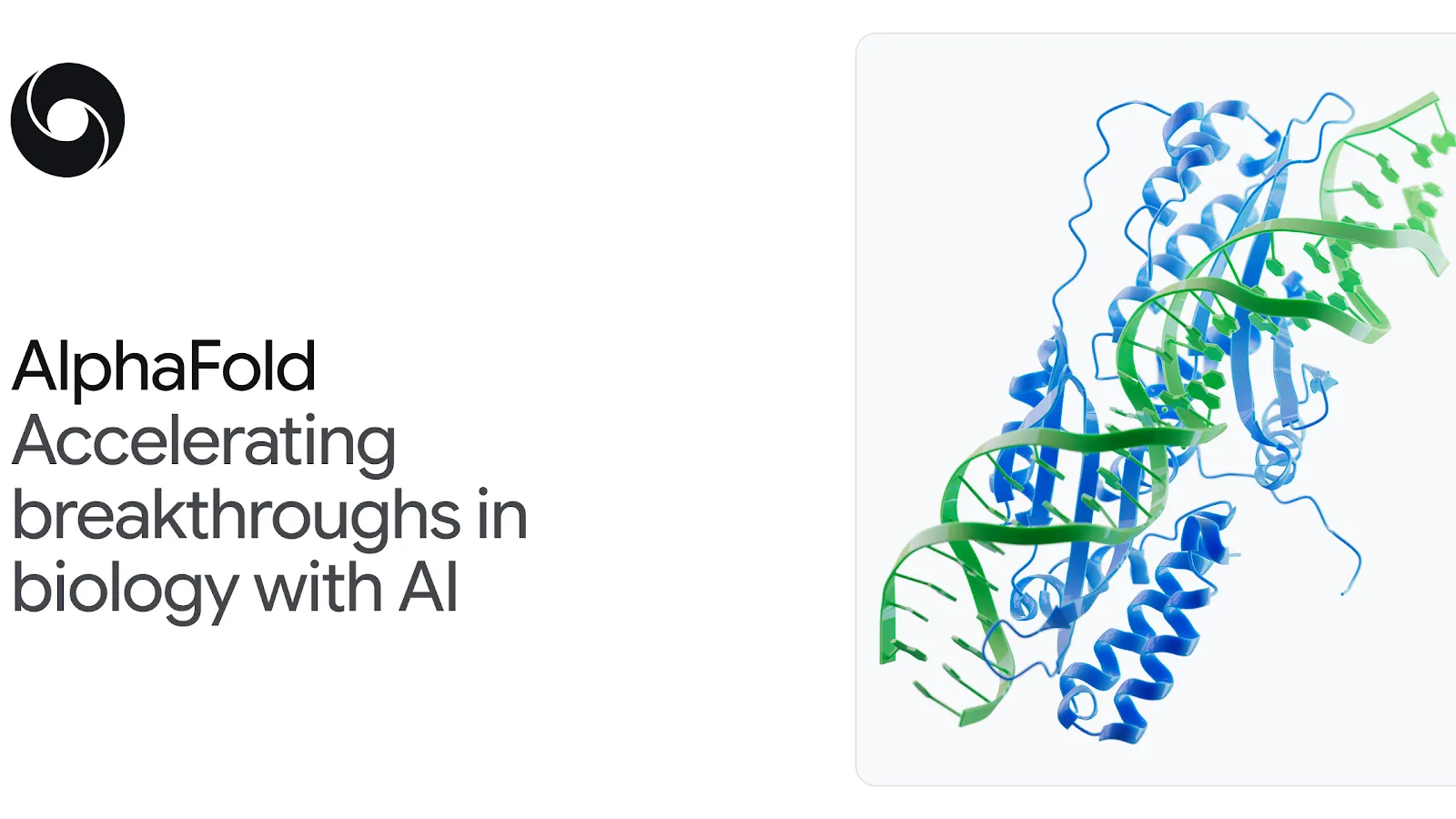
AlphaFold’s impact became undeniable: Now serving 3+ million researchers in 190+ countries with 200+ million predicted protein structures. Research linked to AlphaFold is twice as likely to be cited in clinical articles. What took “months and years” can now be done “in a weekend.”
This Too Shall Pass
The interesting thing is that a number of these are already looking quaint. Capabilities are evolving so quickly that the “WOW” moments get normalized faster than ever. The diffusion of these broadly within society will take much longer of course, but I’m looking forward to the next set of wow moments that 2026 brings!

This post is also on Substack, where you can comment.